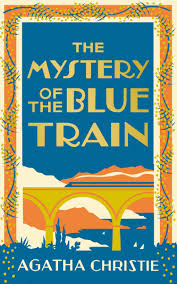
The Mystery of the Blue Train
👤| Published | March 1928 |
| Genre | Detective Mystery |
| Publisher | Collins Crime Club |
| Language | English |
| Series | Hercule Poirot #6 |
📝My Honest Review: The Mystery of the Blue Train
This book is basically a "dry run" for Murder on the Orient Express. It’s got the luxury train, the wealthy victims, and the French Riviera. The plot follows Ruth Kettering, the daughter of a billionaire, who is found murdered and her famous rubies stolen. As Poirot notes during a conversation about the luxury of the train:
"Train life is quiet, and the mind can focus... but murder, it is never quiet."
Now, let's get critical. This book is a re-hash. Christie literally took a short story she had already published (*The Plymouth Express*) and stretched it out into a full novel. You can feel the "padding." There are long subplots about Katherine Grey (a woman who just inherited money) that feel like they belong in a different book. It takes a long time for the mystery to actually get moving.
Poirot also feels a bit "standard" here. He does his usual tricks, but he lacks the spark he has in Roger Ackroyd or Styles. If you love the atmosphere of the 1920s French Riviera, you'll enjoy the scenery, but the actual puzzle is one of her most transparent. If you're paying attention, the killer is pretty obvious from early on.
⏱️ 1-Minute Summary (for busy readers)
Ruth Kettering is escaping her failing marriage by taking the "Blue Train" to the Riviera to meet her lover. Her father has gifted her the "Heart of Fire" rubies. During the journey, Ruth is strangled beyond recognition and the rubies are stolen. Hercule Poirot is on the train and is asked by her father to find the killer.
The twist? It was an inside job involving a master criminal. The killer is Derek Kettering (the husband) working with Knighton (the father's secretary). Knighton was actually a legendary jewel thief known as "The Marquis." They planned the murder to get the inheritance and the jewels. The mystery relies on a disguise trick where the maid was actually part of the plot. It’s a very traditional "greedy husband/secret identity" finale.
🔹 The Critic's Report Card
| ⭐ Rating | 2.8 / 5 Good for atmosphere, but the mystery is weak and unoriginal. |
|---|---|
| 👍 What I Loved | The introduction of St. Mary Mead. This is the first time the village (later home to Miss Marple) is mentioned in a Christie book, which is a cool bit of history. |
| 👎 What I Didn’t Like | The pacing. It feels like a short story that was forcefully stretched out to 200+ pages. Lots of filler conversations. |
| 😐 Overrated or Underrated? | Overrated. Because it’s an "early" Poirot, people treat it as a classic, but Christie herself was right—it’s not her best. |
👤 Human Take: Writing Through the Pain
The "human" story here isn't the murder; it's Agatha Christie herself. You can feel her exhaustion in the prose. She was writing this solely for the money during a time when her world was falling apart. This book is a reminder that even geniuses have "off days." It’s a professional piece of work, but it lacks the joy of discovery that makes her other books so vibrant.
The Final Word: If you want a train mystery, read Orient Express. If you’ve already read everything else and just need more Poirot, then go ahead and hop on the Blue Train.
Discover Your Next Great Read
Handpicked recommendations from our collection of literary treasures








💬Discussions