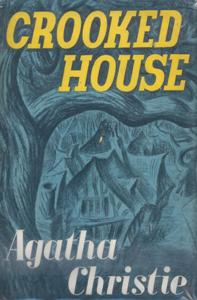
Crooked House
👤| Published | March 1949 |
| Genre | Psychological Mystery |
| Publisher | Collins Crime Club |
| Language | English |
| POV | First Person (Charles Hayward) |
📝My Honest Review: Crooked House
This isn't a "fun" mystery. It's a dark, claustrophobic study of a family living in a house that looks like a cottage but has grown into a sprawling, multi-generational mess. The patriarch, Aristide Leonides, is murdered with his own eye medicine, and everyone in the house has a reason to be happy he’s gone. As the narrator’s father (a high-ranking police officer) tells him:
"I’m interested in the Leonides family. They’re a very interesting family. Not at all the kind of family you expect to find in a crooked house."
Now, as a critic, I have to warn you: **the narrator is pretty boring**. Charles Hayward is only there to ask questions and fall in love with Aristide’s granddaughter, Sophia. He doesn't have the charm of Poirot or the sharp wit of Marple. The middle section of the book is basically a series of "interviews" with people who are all equally unpleasant, which can make the pacing feel a bit flat.
But the **ending**... wow. Even if you think you’ve guessed it, the sheer coldness of the reveal is enough to make your blood run cold. It breaks a major "taboo" in mystery writing that almost no other author at the time would have dared to touch. It’s a 5-star ending attached to a 3-star investigation.
⏱️ 1-Minute Summary (for busy readers)
Aristide Leonides, a wealthy Greek businessman, is murdered in his home, "Three Gables." Suspicion falls on his young second wife, Brenda, and the children's tutor, Laurence, who are suspected of having an affair. Charles Hayward, engaged to Aristide’s granddaughter, is allowed inside the house to observe the family for the police.
The twist is the most famous in Christie's career: The killer is the 12-year-old granddaughter, Josephine. She killed her grandfather because he wouldn't let her take ballet lessons. She also killed the nanny and tried to poison herself to deflect suspicion. She recorded all her crimes in a secret diary. In the end, her Great-Aunt Edith finds the diary, realizes the truth, and drives Josephine off a cliff in a murder-suicide to save the rest of the family from the shame and to stop Josephine from killing again.
🔹 The Critic's Report Card
| ⭐ Rating | 4.8 / 5 Brave, disturbing, and unforgettable. |
|---|---|
| 👍 What I Loved | The bravery of the ending. Christie refused to change it, and it remains one of the most powerful "punches" in literary history. |
| 👎 What I Didn’t Like | The narrator. Charles Hayward is a bit of a "wet blanket." You don't really care about his romance with Sophia at all. |
| 😐 Overrated or Underrated? | Properly Rated. It’s a top-5 Christie book for every serious fan. |
👤 Human Take: The Seeds of Evil
The "human" tragedy here is that Josephine wasn't born a monster; she was a lonely, highly intelligent, and completely ignored child who was obsessed with detective stories. She treated the murder of her grandfather like a game or a "plot" in one of her books. It’s a terrifying look at what happens when a brilliant mind grows up without any moral compass or emotional connection.
The Final Word: It’s a chilling, brilliant, and deeply uncomfortable book. It proves that the most "crooked" things in life aren't houses or roads—they are people.
Discover Your Next Great Read
Handpicked recommendations from our collection of literary treasures
💬Discussions