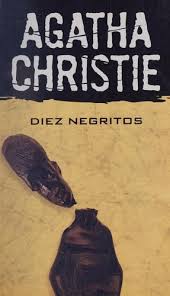
Diez Negritos (And Then There Were None)
👤| Published | November 6, 1939 |
| Genre | Psychological Thriller / Locked-Room |
| Publisher | Collins Crime Club |
| Language | Spanish |
| Status | Standalone Masterpiece |
📝My Honest Review: Diez Negritos
This is not a "cozy" mystery. There is no detective coming to save anyone. It is a nightmare scenario: ten strangers trapped on an island, being hunted one by one. As one of the characters realizes in a moment of pure terror:
"We’re the zoo… last night we were people. Tonight we’re just animals."
As a critic, it’s hard to find anything "bad" to say about this book. It is mechanically perfect. However, if I’m being nitpicky, the **character depth is a bit thin**. Because there are ten of them and they start dying almost immediately, you don't get a deep psychological profile of everyone. They are more like archetypes—the "brave soldier," the "religious spinster," the "guilty doctor."
Also, the ending relies on a "confession in a bottle" because, without it, the crime is literally unsolvable. Some people find that a bit frustrating—the idea that the detective (you, the reader) can't actually "win" without the killer explaining themselves. But the sheer atmosphere of dread and paranoia is so well-done that you probably won't care.
⏱️ 1-Minute Summary (for busy readers)
Ten people are lured to a private island under various pretenses. During dinner, a gramophone record accuses each of them of a past murder they escaped justice for. One by one, they are killed in ways that mirror a nursery rhyme. Every time a person dies, one of the ten soldier figurines on the table is broken.
By the end, all ten are dead. The police find a literal "locked island" with ten corpses and no survivor. The truth is found in a letter: Judge Wargrave was the killer. Dying of a terminal illness, he wanted to execute those the law couldn't touch. He faked his own death halfway through (with the help of the doctor) to act as the "invisible" killer. He then committed suicide in a way that left his body exactly where he "died" earlier, creating an impossible puzzle.
🔹 The Critic's Report Card
| ⭐ Rating | 5.0 / 5 Flawless execution. The gold standard for the genre. |
|---|---|
| 👍 What I Loved | The pacing. The way the figurines disappear one by one creates a sense of "ticking clock" suspense that is unmatched. |
| 👎 What I Didn’t Like | The lack of a hero. It’s a very cynical, hopeless book. If you’re looking for someone to root for, you won't find them here. |
| 😐 Overrated or Underrated? | Perfectly Rated. It’s the most famous mystery book for a reason. |
👤 Human Take: The Weight of Guilt
What makes this book "human" is how guilt acts as its own executioner. Some characters go mad, some become paralyzed by fear, and some accept their fate because they know they deserve it. It’s a study of what people do when they are cornered and forced to face the worst thing they’ve ever done. It’s a chilling reminder that you can never truly run away from yourself.
The Final Word: If you only read one mystery in your life, let it be this one. It’s a dark, brilliant, and terrifying ride into the heart of human darkness.
Discover Your Next Great Read
Handpicked recommendations from our collection of literary treasures

💬Discussions