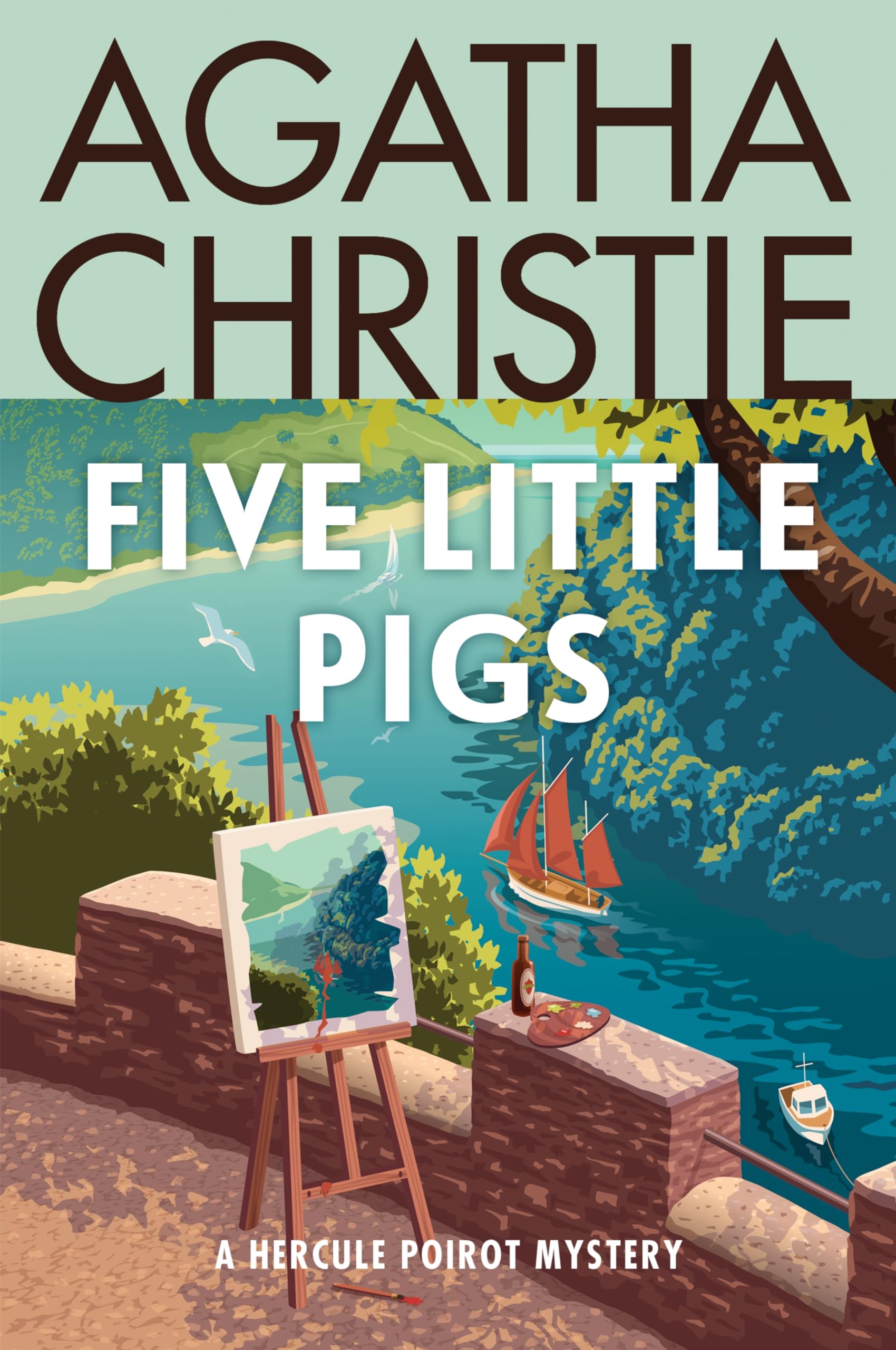
Five Little Pigs
👤| Published | May 1942 |
| Genre | Historical Mystery / Psychology |
| Publisher | Collins Crime Club |
| Language | English |
| Series | Hercule Poirot #24 |
📝My Honest Review: Five Little Pigs
If you like car chases and explosions, put this book back on the shelf right now. Five Little Pigs is what I call a "brain" book. The murder happened sixteen years ago. There is no physical evidence left, no fresh crime scene, and no fingerprints. It’s just Hercule Poirot sitting down with five people and asking them to remember a hot summer day from their past. It’s essentially five people telling the same story from different perspectives.
Now, as a critic, I have to point out the repetitive nature of this format. You are literally going to read about the same lunch and the same glass of beer five times in a row. For some readers, this is boring as hell. If you don't have the patience for subtle details, you’ll find yourself skimming. It's a very slow burn.
However, the human side of this story is heartbreaking. This isn't just a puzzle; it's a tragedy about a woman (Caroline Crale) who was hanged for a crime she didn't commit, leaving her daughter to grow up in the shadow of a "murderess." The way Christie peels back the layers of memory to show how people lie to themselves—and not just to the police—is nothing short of genius. It’s the most "literary" book Christie ever wrote.
⏱️ 1-Minute Summary (for busy readers)
Carla Lemarchant approaches Hercule Poirot to solve a sixteen-year-old mystery: the murder of her father, the famous painter Amyas Crale. Her mother, Caroline, was convicted and died in prison, but she left Carla a letter claiming she was innocent. Poirot tracks down the five other people present that day: the "Five Little Pigs."
Through their written accounts and interviews, Poirot reconstructs the day Amyas was poisoned with coniine in his beer. While everyone assumed the jealous Caroline did it because Amyas was leaving her for his young muse, Elsa, Poirot finds the truth hidden in a tiny detail about a "stolen" bottle of poison. Elsa Greer was the real killer; she poisoned Amyas when she realized he was actually going to send her away and stay with his wife. Caroline realized Elsa did it, but she chose to take the blame to protect her younger sister (whom she thought was the killer), resulting in a double tragedy.
🔹 The Critic's Report Card
| ⭐ Rating | 4.7 / 5 A top-tier psychological drama, but slow as molasses. |
|---|---|
| 👍 What I Loved | The character depth. Unlike her other books where suspects are just "types," these people feel real, flawed, and haunted by their past. |
| 👎 What I Didn’t Like | The repetition. Reading the same event five times is a bold move that almost tests the reader's patience. |
| 😐 Overrated or Underrated? | Underrated by casual fans, Properly Rated by critics. It’s a sophisticated piece of writing that deserves more love. |
👤 Human Take: Why this hits hard
The "human" core of this book is the idea of sacrifice. Caroline Crale went to her death not because she was guilty, but because she loved her sister so much she was willing to die to protect her from what she *thought* was the truth. It makes the final reveal not just a "gotcha" moment, but a deep emotional punch.
Critic's Note: This is the book that proves Christie wasn't just a "puzzle maker." She understood the messy, painful ways that people love and hate each other. If you want a book that stays in your head long after you finish the last page, this is the one.
Discover Your Next Great Read
Handpicked recommendations from our collection of literary treasures

💬Discussions