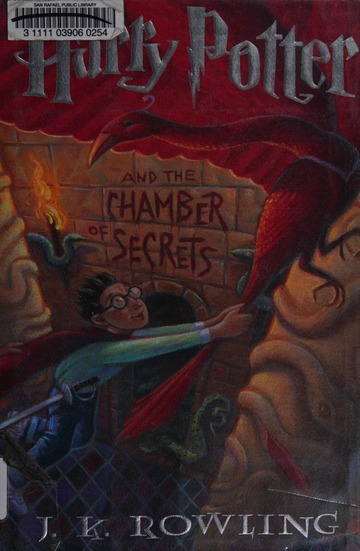
Harry Potter Chamber of Secret
👤| Published | 1998 |
| Genre | Fiction, Fantasy, Mystery |
| Publisher | Bloomsbury |
| Language | English |
| ISBN-10 | 1408855666 |
| ISBN-13 | 978-1408855669 |
📝My Honest Review: Harry Potter and the Chamber of Secrets
I recently revisited Harry Potter and the Chamber of Secrets, and while it’s a classic, I have to be honest—it’s a bit of a "middle child" in the series. It’s significantly darker than the first book, which I liked, but it also follows a very similar formula to *Philosopher’s Stone*, which makes parts of it feel a little repetitive if you read them back-to-back.
The mystery of the "Heir of Slytherin" is genuinely engaging. Rowling does a great job of making you suspect almost everyone—from Draco to even Hagrid. However, the pacing in the middle feels a bit slow. There are a lot of chapters of Harry, Ron, and Hermione just waiting for the Polyjuice Potion to brew, which slows down the tension that the "petrification" attacks should be creating.
Gilderoy Lockhart is the absolute highlight of this book. He is the perfect "love to hate" character—annoying, vain, and a great commentary on how fame can be built on lies. On the other hand, some of the darker elements, like the prejudice against "Mudbloods," feel quite heavy for a children’s book. It adds depth, but it shifts the tone from the magical wonder of the first book into something much more grounded and gritty.
The finale in the Chamber is iconic, though the "Deus Ex Machina" moment with Fawkes the Phoenix feels a bit too convenient. It’s a solid sequel that expands the world and the history of Hogwarts, but it lacks the fresh "wow" factor of the debut. It’s a necessary bridge to the much better books that follow, but it's not my favorite in the series.
⏱️ 1-Minute Summary (for busy readers)
Harry returns to Hogwarts for his second year despite warnings from a house-elf named Dobby. Soon, a mysterious message on a wall announces that the "Chamber of Secrets" has been opened, and students born to non-magical parents are being turned to stone by an unseen monster.
Harry, Ron, and Hermione investigate the school's history and the legend of Salazar Slytherin. After discovering Harry can speak to snakes (Parseltongue), the school suspects him. Eventually, Harry enters the Chamber to save Ginny Weasley, where he faces a memory of a young Tom Riddle and a giant Basilisk. He wins with the help of Dumbledore's phoenix and destroys Riddle’s diary.
💡 Key Ideas & Themes
🌱 Life Lessons / Takeaways
- Don't trust things that think for themselves: As Mr. Weasley says, never trust anything if you can't see where it keeps its brain (referring to the diary).
- Loyalty earns help: Help will always be given at Hogwarts to those who ask for it—but specifically to those who remain loyal to the right values.
- True bravery isn't being fearless: Harry is terrified in the Chamber, but he does what needs to be done anyway.
🎯 Who Should Read This?
- Fans of the first book who want more lore about Hogwarts.
- Readers who enjoy "whodunnit" style mysteries.
- Anyone who likes a mix of humor (Lockhart) and horror (Aragog).
❌ Who Shouldn't?
- People with severe arachnophobia (the spider scene is intense).
- Readers who want a fast-paced thriller—it has a slow middle section.
🔹 My Honest Rating
| ⭐ Rating (Story, Writing, Value) | 4.0 / 5 A solid sequel that raises the stakes, though it feels a bit repetitive. |
|---|---|
| 👍 What I Loved | The introduction of Dobby and the expansion of the Malfoy family. It made the world feel much larger and more dangerous than just a school. |
| 👎 What I Didn’t Like | The Polyjuice Potion subplot took way too long to develop, only for the trio to get very little useful information from Draco. |
| 😐 Overrated or Underrated? | Underrated. People often rank it last in the series, but the mystery elements are actually very well-crafted for a middle-grade book. |
| 🧠 What Changed My Thinking | It made me realize that even "heroes" (like the adults at Hogwarts) can fail to protect their students, making Harry and his friends' self-reliance more important. |
👤 Author Context (Behind the Scenes)
Why she wrote this book: J.K. Rowling has stated that this was one of the hardest books for her to write because she was terrified of the "sophomore slump" (the fear that the second book won't live up to the first).
Author’s mindset: You can see Rowling moving from "fairytale" magic to "political" magic here. She started introducing the dark history of the Wizarding World that would eventually lead to the return of Voldemort in later books.
Reception: While it was a massive bestseller, many critics at the time felt it was "too scary" for the age group. However, it won the British Book Award for Children's Book of the Year, proving the fans disagreed!
Discover Your Next Great Read
Handpicked recommendations from our collection of literary treasures
💬Discussions