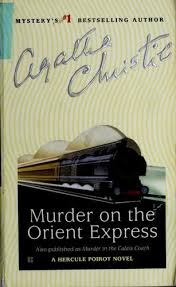
Murder on the Orient Express
👤| Published | January 1, 1934 |
| Genre | Classic Detective Mystery |
| Publisher | Collins Crime Club |
| Language | English |
| Series | Hercule Poirot #10 |
📝My Honest Review: Murder on the Orient Express
The setup is iconic: a luxury train trapped in a snowdrift in the middle of nowhere, a man found dead with twelve stab wounds, and a carriage full of people from every walk of life who all seem to have air-tight alibis. As Hercule Poirot says when he realizes the scale of the puzzle:
"The impossible could not have happened, therefore the impossible must be possible in spite of appearances."
Now, let's talk like critics. The biggest problem with this book is the middle section. If you aren't a fan of repetitive interviews, you might find it a slog. Poirot spends chapter after chapter just sitting in a chair, asking twelve different people the same questions about when they went to sleep and if they saw a woman in a red kimono. It can feel more like a police report than a novel at times.
Also, the coincidence level is off the charts. Every single passenger on that train happens to be connected to the same kidnapping case from years ago? It's a massive "suspension of disbelief" ask. But, and this is a big "but," the ending is so emotionally charged and morally complex that it makes you forget all the logic gaps. It’s one of the few mysteries that actually makes you think about the nature of justice vs. the law.
⏱️ 1-Minute Summary (for busy readers)
While traveling on the Orient Express, a nasty American millionaire named Ratchett is murdered. The train is stuck in a snowbank, so nobody could have entered or left. Hercule Poirot discovers that Ratchett was actually a criminal named Cassetti, who kidnapped and murdered a little girl named Daisy Armstrong and escaped justice on a technicality.
Poirot discovers that every passenger in the coach was actually a member of the Armstrong family, their staff, or close friends. In the most famous twist in history, he reveals that they all did it together. Each of the twelve suspects stabbed Ratchett once to act as a self-appointed jury. Poirot, facing a huge moral dilemma, chooses to tell the police a "fake" solution (a mysterious intruder) to let the group go free, believing that justice has truly been served.
🔹 The Critic's Report Card
| ⭐ Rating | 4.5 / 5 A perfect ending that saves a slightly repetitive middle. |
|---|---|
| 👍 What I Loved | The Moral Dilemma. Seeing the usually strict, law-abiding Poirot decide that the law is wrong and the "killers" are right is a 5-star character moment. |
| 👎 What I Didn’t Like | The Pacing. It’s a lot of talking and very little "doing." If you aren't into the puzzle aspect, you might get bored during the interviews. |
| 😐 Overrated or Underrated? | Perfectly Rated. It deserves its spot at the top of the mystery genre. |
👤 Human Take: The Tragedy of Grief
The "human" part of this book is the Armstrong case. Christie based it on the real-life Lindbergh kidnapping, and you can feel the genuine pain in how she describes a family destroyed by one man's greed. This isn't a murder committed for money or jealousy—it's a murder committed by people who have had their hearts broken and couldn't find peace. It makes the killers very sympathetic, which is rare for a classic whodunnit.
The Final Word: It’s a cold, snowy, and deeply emotional puzzle. If you can get past the slow middle section, the ending will stay with you forever.
Discover Your Next Great Read
Handpicked recommendations from our collection of literary treasures
💬Discussions