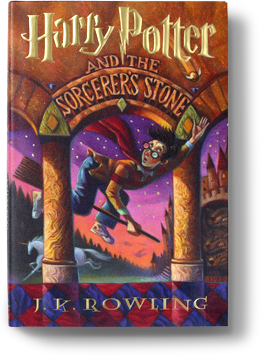
Harry Potter and the Philosopher's Stone
👤| Published | June 26, 1997 |
| Genre | Fantasy, Young Adult, Adventure |
| Publisher | Bloomsbury |
| Language | English |
| ISBN-10 | 0747532699 |
| ISBN-13 | 978-0747532699 |
📝My Honest Review: Harry Potter and the Philosopher's Stone
I recently went back to where it all started with the Philosopher’s Stone. Even after all these years, there is a certain "magic" in this book that the later, darker sequels sometimes lose. It is the purest form of world-building I’ve ever read. However, reading it as an adult, you do notice how simple the prose is compared to the rest of the series.
The introduction to Harry’s life with the Dursleys is still heartbreakingly effective. It makes you root for him instantly. The transition from the "grey" world of Privet Drive to the colorful Diagon Alley is a masterclass in pacing. But, if I’m being critical, the plot relies heavily on the adults at Hogwarts being remarkably irresponsible—I mean, who hides a deadly artifact in a school full of curious children?
The trio's chemistry is the soul of the book. Seeing Hermione go from an "insufferable know-it-all" to a loyal friend is one of the best character arcs in children's literature. My only real gripe is the "points system" at the end; Gryffindor winning the House Cup because Dumbledore suddenly decided to hand out last-minute points felt a bit unfair to the other houses who worked hard all year!
Overall, it's a nearly perfect introduction. It’s light, imaginative, and sets up a massive mystery without feeling overwhelming. It’s the foundation of everything that follows, and it holds up surprisingly well.
⏱️ 1-Minute Summary (for busy readers)
Harry Potter, an orphan living with his cruel relatives, discovers on his 11th birthday that he is a wizard. He is whisked away to Hogwarts School of Witchcraft and Wizardry, where he makes his first real friends, Ron and Hermione, and learns that his parents were killed by the dark wizard Voldemort.
Harry learns that someone is trying to steal the Philosopher's Stone, a legendary object that grants immortality. Suspecting Professor Snape, the trio navigates a series of magical traps—including a giant three-headed dog and a lethal chess game. In the end, Harry discovers the true villain is Professor Quirrell, who is being possessed by Voldemort. Harry protects the stone and secures his place in the wizarding world.
💡 Key Ideas & Themes
🌱 Life Lessons / Takeaways
- It does not do to dwell on dreams: As Dumbledore tells Harry at the Mirror of Erised, dreaming is good, but not at the expense of actually living your life.
- Face your friends: It takes a great deal of bravery to stand up to our enemies, but just as much to stand up to our friends.
- Curiosity is a double-edged sword: Harry’s need to know the truth gets him into trouble, but it’s also the only thing that saves the school.
🎯 Who Should Read This?
- Literally everyone. It’s a cultural touchstone.
- Anyone who needs a "comfort read" to escape reality.
- Parents looking for a book to read with their children.
❌ Who Shouldn't?
- Readers who only enjoy very "hard" or gritty realistic fantasy.
- Those who find "chosen one" tropes too predictable.
🔹 My Honest Rating
| ⭐ Rating (Story, Writing, Value) | 5.0 / 5 A masterfully crafted beginning. It’s hard to find a flaw in the pacing or world-building. |
|---|---|
| 👍 What I Loved | The Diagon Alley introduction. The way the magical world is hidden right under the noses of Muggles is brilliant. |
| 👎 What I Didn’t Like | The House Cup points at the end. It felt like a bit of a "robbery" for Slytherin, regardless of who the "bad guys" were! |
| 😐 Overrated or Underrated? | Properly Rated. It deserves every bit of the fame it has. |
| 🧠 What Changed My Thinking | It changed how I view "children's books." It proved they can handle serious themes like death and sacrifice while still being fun. |
👤 Author Context (Behind the Scenes)
Why she wrote this book: J.K. Rowling came up with the idea for Harry Potter while on a delayed train from Manchester to London in 1990. She spent the next five years planning the seven books of the series.
Author’s mindset: Rowling was writing as a single mother struggling with poverty. You can see this reflected in the way she writes about the "haves" (the Malfoys) and the "have-nots" (the Weasleys), and Harry’s own desire for a family.
Reception: It was famously rejected by 12 publishing houses before Bloomsbury took a chance on it. The initial print run was only 500 copies—today, it's one of the best-selling books in human history.
Discover Your Next Great Read
Handpicked recommendations from our collection of literary treasures

💬Discussions